
motivationalinterview
Master Gold Farming in World of Warcraft
-
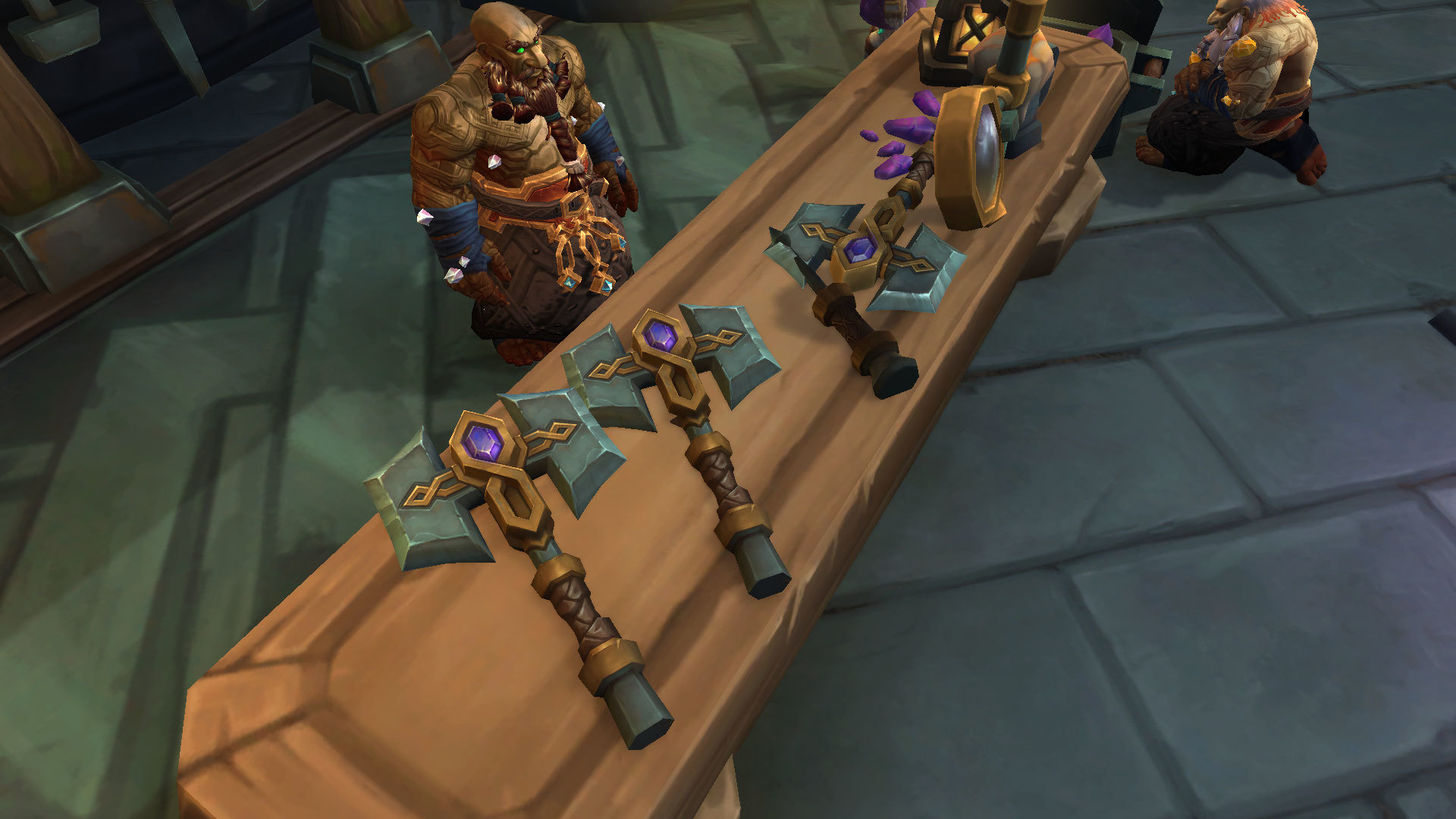
The Simplification of Weapon Speed: How Weapon Normalization Changed Melee DPS Forever
In the ever-evolving landscape of World of Warcraft, the mechanics of melee damage per second (DPS) have undergone significant changes, most notably through the concept of weapon normalization. This process has streamlined the way weapon speeds interact with abilities, leading to a more balanced and equitable experience for melee classes. Prior to normalization, weapon speed…
-
Pre-Raid BiS: Best Gear Before Your First Raid
Entering your first raid without preparation sets you up for failure. Pre-raid best-in-slot (BiS) gear ensures you meet minimum item level requirements and perform adequately. This guide covers gear acquisition strategies, priority slots, and budget-friendly options for new raiders. Understanding Pre-Raid BiS Pre-raid BiS represents the best gear available without raid drops. This gear comes…
-
WoW Gold for Casuals: A Stable Income Plan Without Auction House Stress
Mastering gold acquisition in World of Warcraft is a distinct economic progression path that often feels intimidating to those who don’t want to “play the market.” Many players assume that wealth requires hours of spreadsheet analysis, leading to a deterministic state of “Gold-Poverty.” However, for players aiming to fund their raiding and consumables with minimal…
Dominate Dungeons: WoW Classic Gold for Unstoppable Runs
Introduction
Dungeon runs in WoW Classic offer great rewards—experience, loot, reputation—but they can also stall your progress when your gear or supplies fall short. Grinding for specific drops or farming crafting mats eats into play time and slows your character’s momentum. Buying WoW Classic Gold gives you a way to clear those bottlenecks instantly. With gold in hand, you can head to the Auction House or vendors, purchase missing gear slots, and stock up on consumables without spending hours on low‑yield farm runs. This approach keeps your dungeon runs smooth, cuts clear times, and lets you focus on strategy and teamwork rather than waiting for rare drops.
By investing a small amount of gold at key moments, you remove roadblocks that cause wipes or slow pulls. If your weapon lags behind the dungeon level, you upgrade it with a few clicks instead of chasing a drop. When your potion stock runs low mid‑run, you refill your bags in minutes rather than abandoning the group. Bought gold becomes a tool for maintaining peak performance across every pull and every boss. This guide shows you how to plan core gear buys, fill your consumable needs, and manage travel and support tools so your runs become truly unstoppable.
Core Gear Upgrades for Dungeon Power
Not all gear slots influence your dungeon speed equally. To get the biggest boost from each gold spent, focus first on your weapon and off‑hand (if applicable). A weapon that adds +50 to your main stat—strength, agility, or spell power—can shave seconds off every mob kill, which adds up over dozens of pulls. These weapons typically cost 10–20 gold at max level. Pair this with an off‑hand item that boosts secondary stats like critical strike or hit rating to solidify your damage or healing output. Next, upgrade your chest piece and boots. A chest with +200 health and +50 secondary stat increases your survivability and reduces repair costs from frequent deaths. Boots with +8% movement speed or +30 stamina speed up your movement between pulls and add durability.
After filling these core slots, move to a trinket slot. On‑use trinkets such as Hand of Justice grant burst damage or extra healing for crucial seconds, while passive trinkets like Blackhand’s Breadth add a constant stat buff. These items cost 12–18 gold each but often cut boss fight times and increase clear speed. By concentrating your gold on these four slots—weapon, off‑hand, chest, boots, and one trinket—you maximize your instant power gains and ensure your character performs at peak level throughout the dungeon run.
Stocking Essential Consumables
Running out of health or mana potions mid‑dungeon run can stall your party and force returns to town. To avoid this, carry at least 20 Major Healing Potions and 20 Major Mana Potions—each stack of ten costs roughly 0.4–0.5 gold. Buff foods like Smoked Desert Dumplings or Sagefish Delight grant +25 to your main stat for an hour and cost about 0.2 gold per stack of ten. Elixirs such as Elixir of the Mongoose (+25 agility and +25 crit) run 0.6 gold each, and Elixir of Fortitude (+250 health) costs 0.4 gold. Stock two stacks of each elixir and food, and carry a flask if you’re pulling multiple packs or running multiple wings; flasks like Flask of the Titans cost 1.5 gold each but grant +375 health for one hour.
Beyond potions and buffs, set aside 5–10 gold as a repair fund. Dungeon pulls and boss mechanics damage your gear quickly, and a full repair after a wipe can cost several gold. Having that repair fund in your bag prevents pauses and run‑backs to the vendor. Purchase these consumables and fund repairs immediately after you hit the dungeon level, and restock at major hub cities or via Mage portals when prices dip at auction reset. By covering your consumable needs with bought gold, your dungeon runs stay uninterrupted, your group moves faster, and you dominate every pull without the common slowdowns that plague under‑prepared teams.
Enchants and Gems to Speed Clears
Upgrading your gear with the right enchants and gems delivers clear gains in clear speed and survivability. Enchants add fixed bonuses—like +45 strength on hit for melee or +60 spell power for casters—while gems slot into sockets for main or split stats. Applying these before a dungeon run ensures you hit packs harder and recover faster. Key enchants include Enchant Weapon – Crusader (+45 Strength on hit; ~2.5 g), Enchant Chest – Super Health (+250 Health; ~1 g), and Enchant Bracer – Superior Stamina (+9 Stamina; ~0.8 g). For gems, Mighty Stamina (Red Gem) gives +10 Stamina (2.5 g) and Swift Dawnstone (Yellow Gem) provides +4 Agility and +4 Critical Strike (1.5 g).
| Upgrade Type | Slot | Cost (gold) | Stat Gain |
|---|---|---|---|
| Enchant Weapon – Crusader | Weapon | 2.5 g | +45 Strength on hit |
| Enchant Chest – Super Health | Chest | 1.0 g | +250 Health |
| Enchant Bracer – Superior Stamina | Bracers | 0.8 g | +9 Stamina |
| Mighty Stamina Gem (Red) | Helmet/Belt | 2.5 g | +10 Stamina |
| Swift Dawnstone (Yellow) Gem | Helmet/Belt | 1.5 g | +4 Agility, +4 Crit Strike |
| Insightful Earthstorm Diamond | Any (Meta) | 5.0 g | +5 All Stats when above 90% Health |
Steps to apply enchants and gems:
- Buy in Bulk – Purchase 3–5 scrolls and gems at once to catch volume discounts.
- Visit Enchanter NPC & Socket Bench – Apply all upgrades in one visit.
- Test on a Practice Pull – Run a pack of five mobs to confirm faster clear times.
With these enchants and gems in place, each dungeon pull hits harder, reducing overall run time and boosting group success rates.
Travel and Reset Strategies
Efficient travel and instance resets keep your dungeon group moving without pauses. First, secure your mount: Apprentice Riding at level 40 costs 5.8 gold for a 60% speed boost, and Journeyman Riding at level 60 costs 11 gold for 100% speed. To save, set aside ~0.3 gold per level from 20 to 40 and ~0.6 gold per level from 40 to 60. This prevents scrambling for funds at the mount unlock levels.
Unlock key flight paths for about 0.1–0.3 gold each—prioritize nodes near major dungeons like Stratholme, Scholomance, and UBRS. Bind your hearthstone at the closest inn at 0.02 gold per bind; moving it to an inn near your active dungeon hub means fast returns after bag checks or repairs. For group breaks or emergency city runs, use Mage portals or Warlock summons at 0.75–1 gold per use—far faster than running back through zone grinds.
Travel Checklist:
- Mount Training & Purchase: Apprentice (5.8 g), Journeyman (11 g)
- Flight Path Unlocks: 0.1–0.3 g per hub (Ironforge/Orgrimmar, Booty Bay, etc.)
- Hearthstone Binds: 0.02 g per change at dungeon‑adjacent inns
- Portals/Summons: 0.75–1 g per group transfer
Integrating these travel strategies with your dungeon schedule ensures you spend minutes instead of hours moving between zones, vendors, and instances—maximizing actual run time and group efficiency.
Group‑Ready Support Tools
Beyond your personal gear and supplies, certain tools and services help the entire party maintain momentum. Repair Bot Scrolls (Engineering or vendor‑bought) let you place a device in‑instance to repair everyone without leaving. Vendor Bot Consumables supply basic potions, food, and reagents mid‑run, avoiding group splits for town visits. Summon Services—hiring a Mage for portals or a Warlock for summons—get latecomers or repair‑needy players back in action instantly. Finally, Buff Rotations ensure critical group buffs like Arcane Intellect or Mark of the Wild remain active without draining a single player’s reserves.
Group‑Support List:
- Repair Bot Scroll (2–3 g) – On‑demand repairs anywhere in the dungeon.
- Vendor Bot Consumables (1–2 g) – Stocks common potions and food in‑instance.
- Mage Portal / Warlock Summon (0.75–1 g) – Quick group travel for stragglers and supplies.
- Buff Bot Rotation – Designate a Mage or Druid to maintain group-wide stat buffs.
- Shared Consumable Pool – Pre‑buy and distribute flasks, elixirs, and potions before runs.
Setting up these support tools before each run means fewer interruptions, no split‑group downtime, and continuous push through multiple dungeon wings. Your bought gold delivers unstoppable runs when it covers both personal gear and group utilities, ensuring every pull counts.
Testing and Tweaking Your Setup
Every purchase should earn its weight in performance gains. After buying core gear, consumables, or enchants, run a quick test in a controlled setting: pick a standard pack of five mobs or use a raid dummy.
Testing Procedure:
- Baseline Run – Measure clear time or DPS/ HPS without the new upgrade.
- Apply Upgrade – Equip the new item or use the consumable.
- Comparison Run – Rerun the test scenario and record metrics.
- Calculate Gain – Look for at least a 5% improvement.
- Decide – Keep upgrades that clear the threshold; sell or revert those that don’t.
Test Log Example:
- Upgrade: Enchant Weapon – Crusader
- Scenario: 5‑mob pull in Deadmines
- Baseline DPS: 1,200
- New DPS: 1,300
- Gain: +8% → Keep
Regular testing isolates which buys deliver the greatest returns. If a new trinket adds only 2% to DPS, list it for sale and reallocate that gold to a more impactful slot. Over time, this data‑driven approach refines your loadout so every gold spent secures measurable spikes in dungeon performance.
Conclusion
Dominating dungeons in WoW Classic requires more than raw skill—your gear, consumables, and support tools must match the content level. By buying WoW Classic Gold at key moments, you remove farming bottlenecks, secure core gear upgrades, stock essential potions and flasks, and set up group‑ready tools that keep your party moving. Clear budgeting ensures you never run dry, timing your purchases stretches each gold further, and testing each upgrade confirms real gains. With this strategy of plan, buy, test, and refine, every dungeon run becomes smoother, faster, and more rewarding. Put these steps into action and watch your runs transform from slow crawls to unstoppable clears.